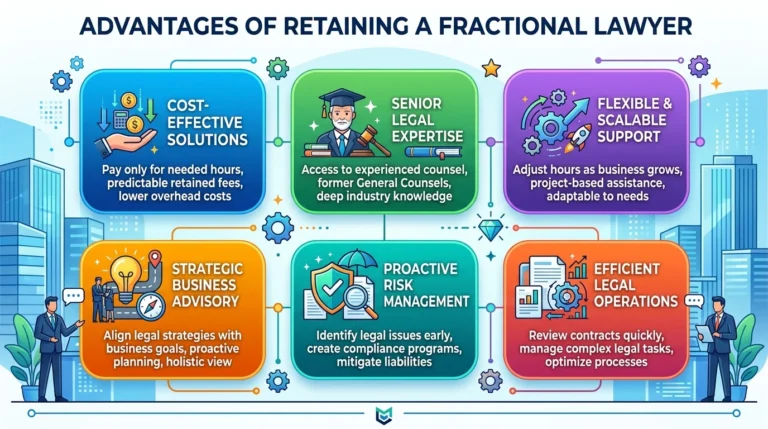

For many UK businesses, the appeal of a fractional lawyer is obvious. You gain access to senior legal expertise without committing to the full cost of a permanent General Counsel or Head of Legal. For growing companies, founder led businesses, private equity backed firms, charities, and scale ups, that can look like an elegant solution.
In many cases, it is. A strong fractional lawyer can help a business negotiate contracts, manage employment issues, support fundraising, strengthen governance, and reduce legal spend. Yet the model is not without its weaknesses. If a business goes into the relationship expecting full time availability, deep sector immersion, and instant integration at a part time price point, disappointment often follows.
The real issue is not that fractional lawyers are inherently problematic. It is that the model creates specific risks which need to be understood and actively managed. In the UK, those risks can be especially important where regulation, privilege, employment status, and accountability are concerned.
This article explores the main disadvantages of retaining fractional lawyers and sets out practical ways to overcome them.
Key Takeaways
| Disadvantage | Risk To Business | Solution |
|---|---|---|
| Limited Availability | Delays on urgent legal issues | Set clear response times |
| Lack Of Business Context | Advice may miss commercial realities | Improve onboarding and access |
| Unclear Responsibility | Legal tasks can be missed | Define scope and ownership |
| Conflicts Of Interest | Confidentiality and trust concerns | Run conflict checks early |
| Privilege Uncertainty | Sensitive advice may not be protected | Structure legal advice carefully |
| Tax And Data Risks | IR35, status, and security issues | Use strong contracts and controls |
What A Fractional Lawyer Typically Means In The UK
In the UK context, a fractional lawyer is usually a senior legal professional who works with a business on a part time, flexible, or limited scope basis. They may operate as:
- an independent consultant
- a solicitor through a law firm
- a contractor through a personal service company
- a temporary in house legal lead for a defined period
The arrangement may involve a set number of days each month, support for a specific project, or ongoing advisory work without full employment.That flexibility is the model’s strength. It is also the source of some disadvantages.
Limited Availability And Accessibility
Challenge:
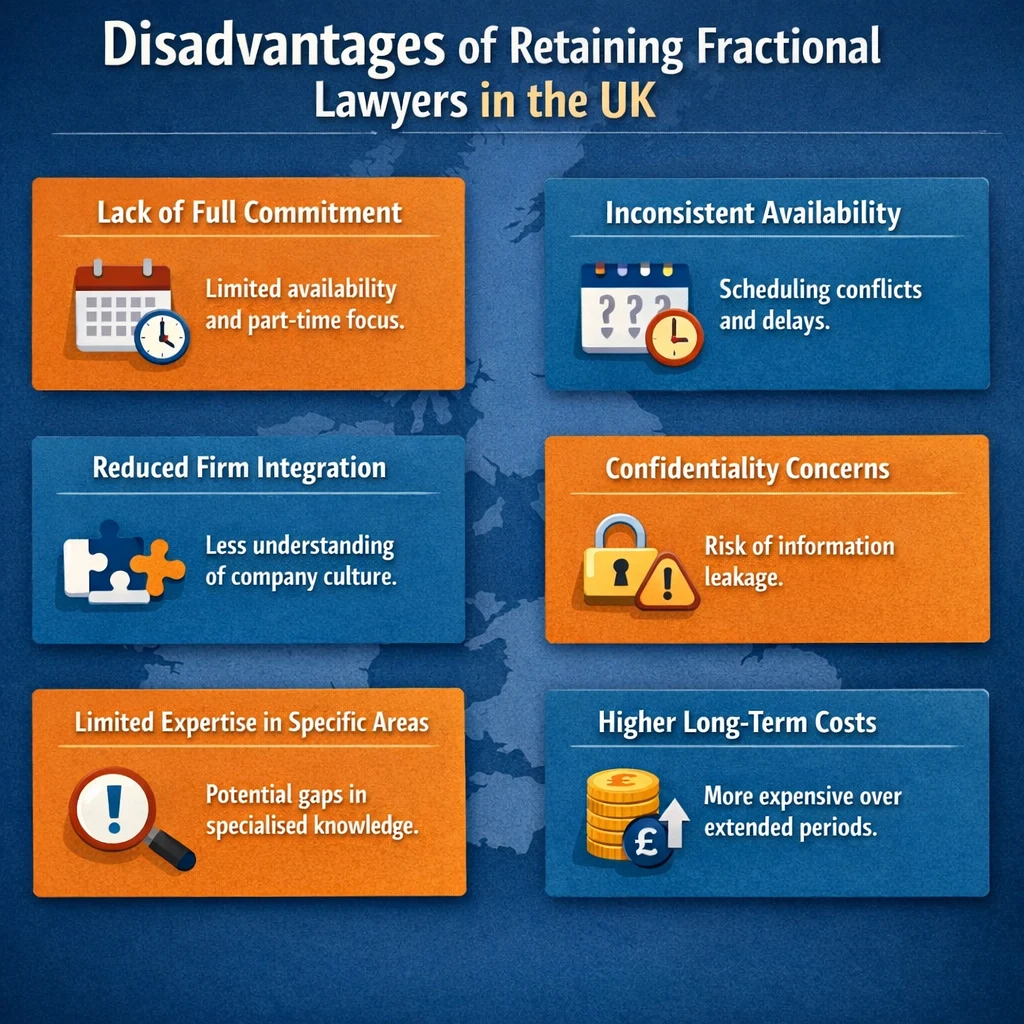
One of the primary disadvantages of fractional lawyers is their limited availability. Since they often work with multiple clients, your business may not always be their top priority. This can lead to delays in response times, especially during critical situations requiring immediate legal attention.
Solution:
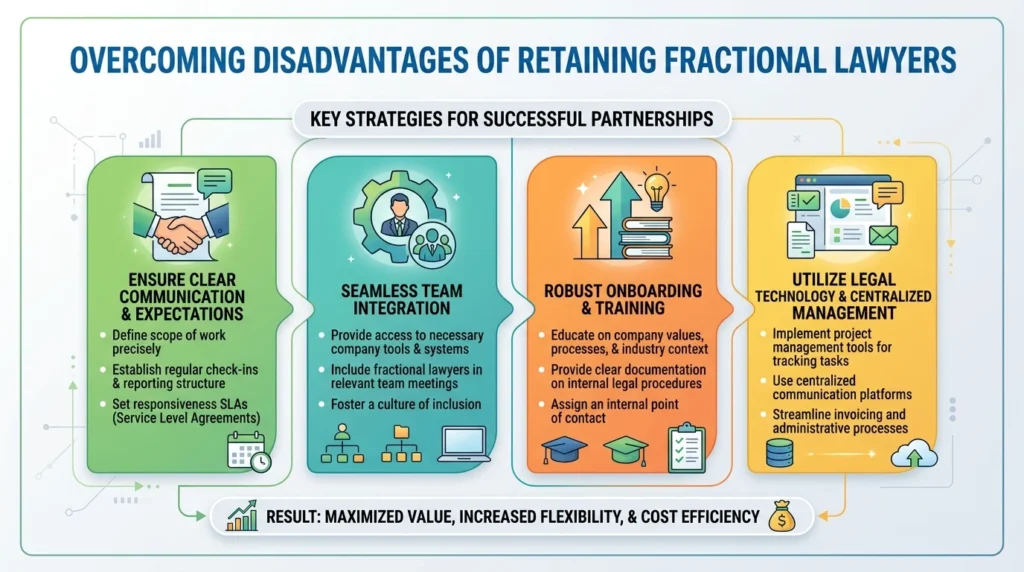
To address this issue, businesses should establish clear communication expectations upfront. Agree on response times for urgent matters and ensure you have a reliable point of contact within the lawyer’s network. Additionally, it may be worth considering fractional lawyers who specialise in your industry as they may be more familiar with common issues and prepared to act swiftly. A business should agree:
- working days and core hours
- response times for urgent and non urgent matters
- what counts as an emergency
- who covers in periods of leave or unavailability
- which issues must be escalated to external counsel
Lack Of Long-Term Commitment
Challenge:
Fractional lawyers operate on a temporary or project basis, meaning they might not have a vested interest in the long-term success of your business. This lack of continuity can hinder the development of an in-depth understanding of your company’s operations, culture, and legal challenges.
Solution:
To mitigate this, consider retaining the same fractional lawyer for recurring projects. Building a long-term professional relationship can help them gain a deeper understanding of your business. Furthermore, providing comprehensive onboarding and background information about your company ensures they are better equipped to represent your interests effectively.
Confidentiality And Security Concerns
Challenge:
Hiring fractional lawyers increases the risk of sensitive information being exposed, especially when they work with multiple clients. Confidentiality and conflicts of interest are significant concerns that can jeopardise your business’s legal standing and reputation.
Solution:
When retaining fractional lawyers, binding them with a well-drafted Non-Disclosure Agreement (NDA) is crucial to protect your business’s confidential information. An NDA ensures that sensitive data shared during the course of legal work remains secure and limits the risk of information leaks or conflicts of interest. It establishes clear confidentiality expectations and creates legal recourse in case of breaches. Additionally, consider using secure communication channels and limiting access to sensitive information to only what is necessary for the task at hand.
Limited Expertise In Specific Areas
Challenge:
Fractional lawyers may offer broad legal support but might lack deep expertise in certain specialised areas of law that your business requires. This limitation can lead to inadequate advice or missed legal nuances, especially in complex fields such as intellectual property, tax law, or regulatory compliance.
Solution:
To overcome this, conduct a thorough assessment of your legal needs before hiring a fractional lawyer. Choose professionals who have proven experience in the specific legal areas relevant to your business. Additionally, consider engaging multiple fractional lawyers with complementary specialisations or supplementing with external law firms for highly specialised matters. This approach ensures comprehensive legal coverage without compromising quality.
Blurred Accountability
Challenge:
One of the biggest risks with any flexible professional arrangement is unclear ownership. If a fractional lawyer is involved but not fully embedded, employees may assume legal matters are being dealt with when they are not.For example, commercial teams may think the lawyer is monitoring contract deviations. HR may assume someone is overseeing settlement agreements. The board may believe governance tasks have been covered. In reality, the lawyer may only have been asked to advise on isolated points.This ambiguity can lead to missed deadlines, unmanaged risk, and confusion over responsibility.
Solution
The business needs a defined legal operating model. In simple terms, everyone should know what the fractional lawyer does, what they do not do, and who owns each type of issue.This should be documented. It can include:
- scope of work
- approval thresholds
- reporting lines
- delegated authority
- matters reserved for the board
- external counsel escalation points
- internal owners for contract, employment, compliance, and governance processes
Lack Of Immediate Integration Into Corporate Culture
Challenge:
Fractional lawyers may not fully integrate into your company’s culture and processes, making it harder for them to align with your goals and values. This can result in miscommunication or legal advice that does not perfectly align with your business objectives.
Solution:
To overcome this, businesses should invest time in introducing fractional lawyers to their corporate culture. Share your company’s mission, vision, and values, and encourage open dialogue to clarify expectations. By fostering a collaborative working relationship, you can ensure that their legal advice aligns more closely with your business’s goals. A proper induction should include:
- the company structure and key group entities
- major customer and supplier arrangements
- funding history and shareholder dynamics
- key policies and templates
- sector specific legal risks
- the organisation chart and decision making lines
- access to previous legal advice and precedent materials
Potential Cost Escalation
Challenge:
While fractional lawyers are generally more cost-effective than full-time counsel, the pay-as-you-go model can lead to unforeseen expenses. If your business requires frequent legal support, the costs may quickly add up, surpassing your initial budget expectations.
Solution:
To avoid cost escalation, assess your legal needs carefully before retaining a fractional lawyer. Establish clear billing practices and request detailed invoices to track expenses. For ongoing legal requirements, consider exploring hybrid models that combine fractional and in-house legal support to optimise cost efficiency. Businesses should agree:
- what is included in the monthly or day rate
- what triggers additional fees
- what types of work are out of scope
- how specialist advice will be handled
- how performance and value will be reviewed
Employment Status And Tax Issues Can Arise
Challenge:
Some businesses view a fractional lawyer as a simple contractor arrangement. In reality, UK employment and tax law can make matters more complicated. If the relationship operates in a way that resembles employment, questions can arise around employment status, tax treatment, and in some cases IR35. This is particularly relevant where the lawyer works regular days, is closely controlled, uses company systems as if they were staff, and becomes deeply integrated into the organisation. The risk is not just financial. Misclassification can create reputational and administrative problems as well.
Solution:
Businesses should take advice on the structure of the engagement before it starts. The right arrangement will depend on the facts, but sensible steps include:
- using a written agreement that reflects the real nature of the relationship
- avoiding artificial labels that do not match day to day practice
- considering tax and employment status from the outset
- reviewing IR35 where relevant
- keeping the arrangement under review if the scope expands over time
If the lawyer becomes central to the business and works in a near full time capacity, a permanent hire may become the more sensible option.
When Fractional Lawyers Work Best
Despite these disadvantages, fractional lawyers can be extremely effective in the right environment. They tend to work best where:
- the business has recurring but not full time legal needs
- leaders are clear about scope and priorities
- there are good internal processes
- specialist work can be routed elsewhere when needed
- the company values senior judgment over constant physical presence
In other words, the model works best when the business wants targeted expertise, not the illusion of a full time legal department at a fraction of the cost.
Conclusion
Retaining fractional lawyers offers businesses in the UK flexibility, cost savings, and access to specialised expertise. However, it is essential to acknowledge and address the associated disadvantages to maximise the value of this arrangement. By setting clear expectations, ensuring confidentiality, and fostering long-term professional relationships, businesses can overcome the challenges of hiring fractional lawyers and enjoy the benefits of this modern legal solution. Careful planning and communication are key to making this approach work effectively.
You can find the advantages of hiring Fractional Lawyers in my article Advantages of Retaining a Fractional Lawyer in 2026 .
Ready to explore fractional legal support?Book a free 15 minute legal health check to find out whether fractional legal support could work for your business. No obligation, no jargon, just an honest conversation about your needs.